The idea behind the decks
Kanji live inside words.
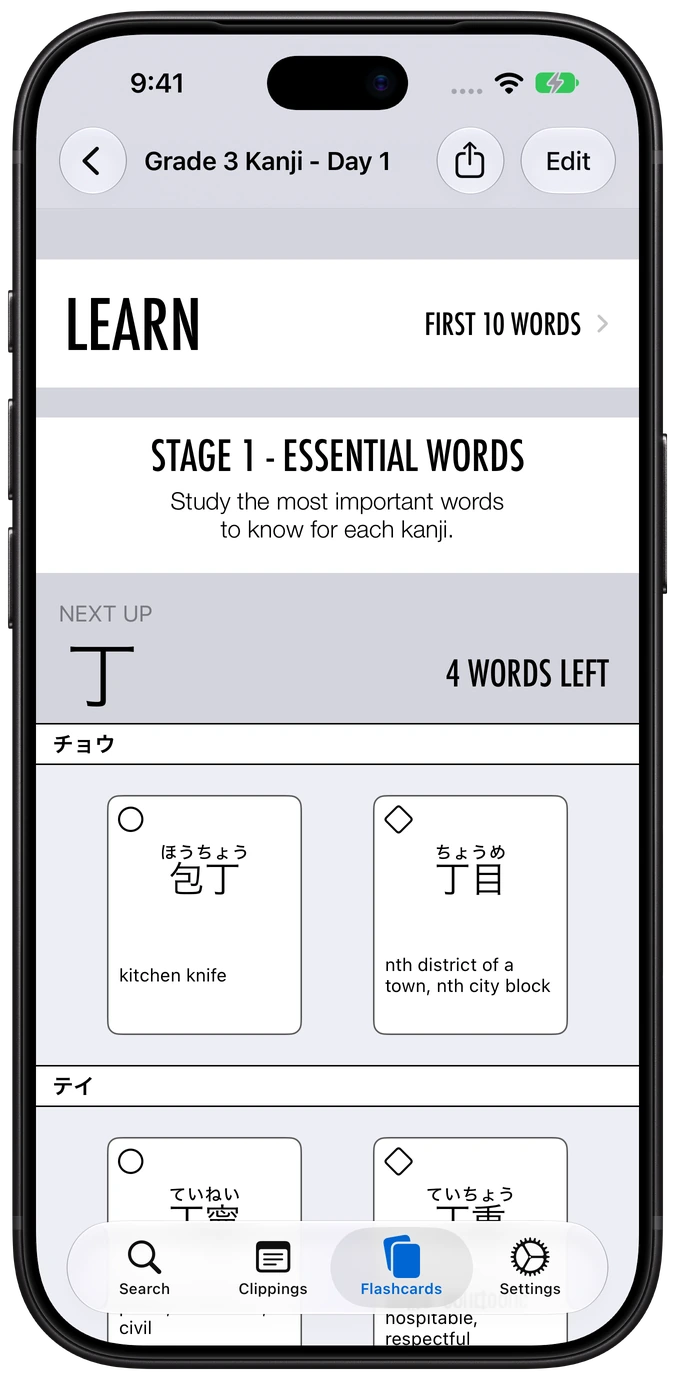
Nihongo’s kanji decks are based on the idea that kanji don’t appear in real Japanese text in isolation; they appear inside words. So it’s best to learn kanji in the context of the actual words that use them.
Words first
Common vocabulary for each character, covering each reading.
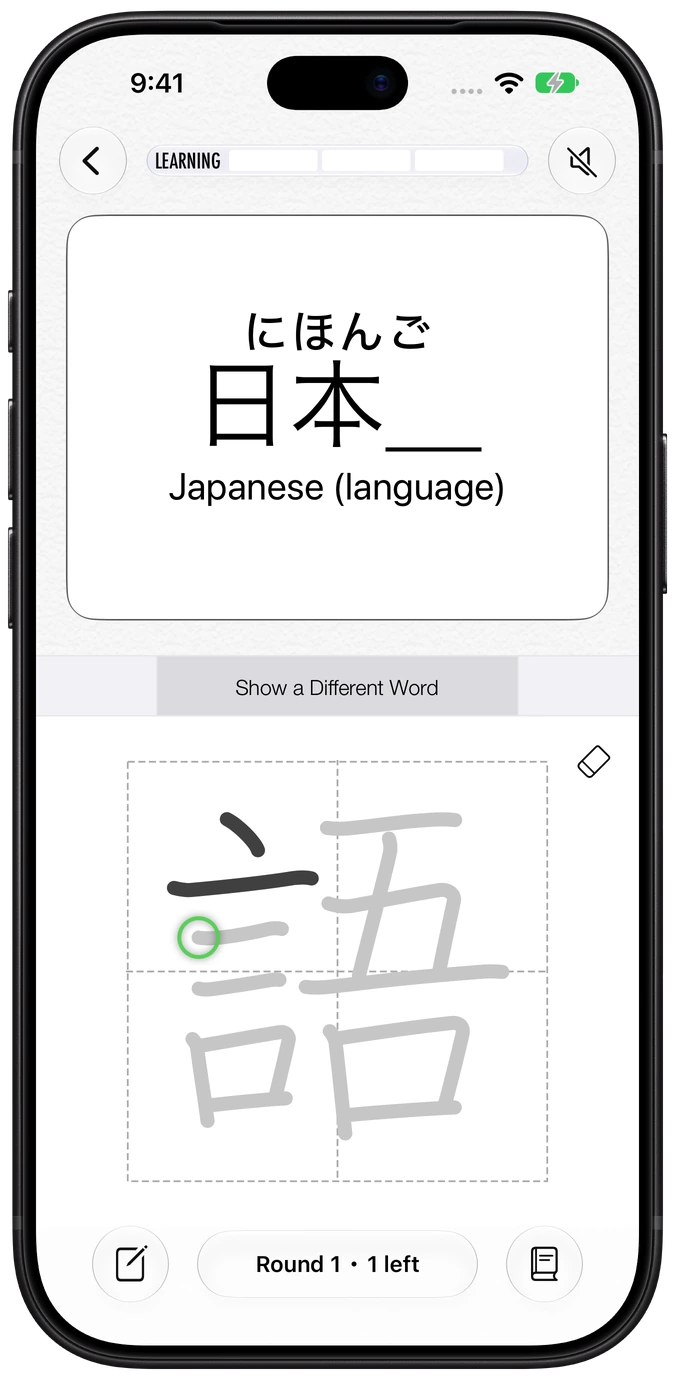
Then handwriting
Get to know the words before practicing how to write the character.
Keep it with you
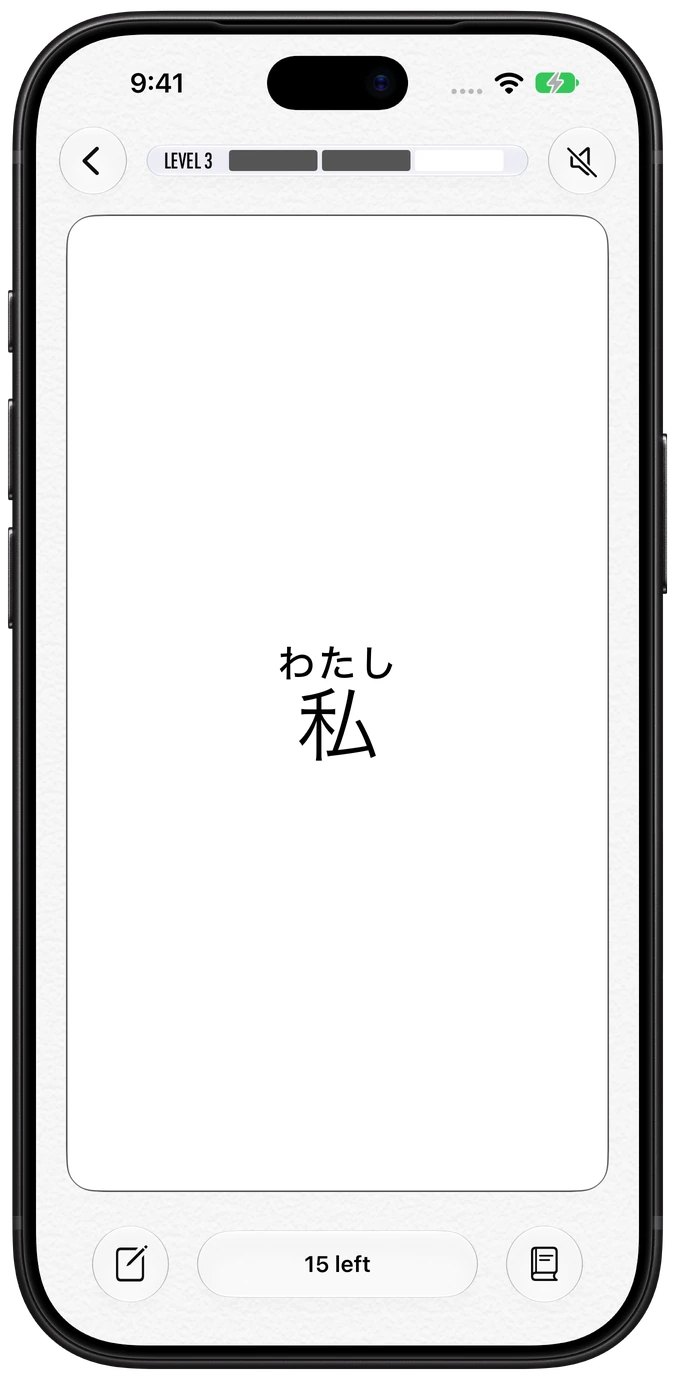
Return to what you’ve learned with spaced repetition review.
01 / Words first
A word for every reading.
We’ve curated a list of the most common words for each character, making sure to include at least one word for each of its readings.
When there’s a main kun-yomi word—a word using the native Japanese reading—we start with it. It often gives you the clearest feel for the kanji’s essential meaning.
For common on-yomi readings, we choose up to three useful words. When a reading has fewer common words, we choose just one.
That balance helps you intuitively give more weight to the common readings, while still having a familiar word to bring the less common ones to mind.
Choose a JLPT level from N5 to N1 and work through its Day decks. Each deck gives you a manageable group of kanji to learn through the vocabulary that uses them.
02 / Then handwriting
Put the character
in your own hand.
After learning the core vocabulary for each character, you’ll learn to write it as well. Practice drawing the kanji, with guidance on stroke order when you need it.
03 / Keep it with you
Learn it today.
Remember it later.
Learning a deck is the beginning. Nihongo’s spaced repetition review brings learned cards back over time, so the words and kanji stay part of your study routine.
A little motivation for test day
JLPT 2026 Challenge
All JLPT kanji flashcard decks are free until test day, December 6. Choose a level, complete 10 decks before test day, and unlock that level forever.
Open Nihongo to get started. Check the app for current challenge availability.
Your next step
Start with a few real words.
Open Nihongo’s Flashcards tab, find the JLPT decks, and choose the level you’re working toward.
You can also study by Japanese school grade. These decks follow the school years when children in Japan learn each kanji, with the same vocabulary-first approach and handwriting practice.

See pricing for regular access options.